Descriptions and story angles
A1 · The one-liner
For a news brief
Vibe Together is a multiplayer music playground where you make music with friends and turn any song you build or discover into a playable level. Make songs you can see.
A2 · The paragraph
The standard boilerplate
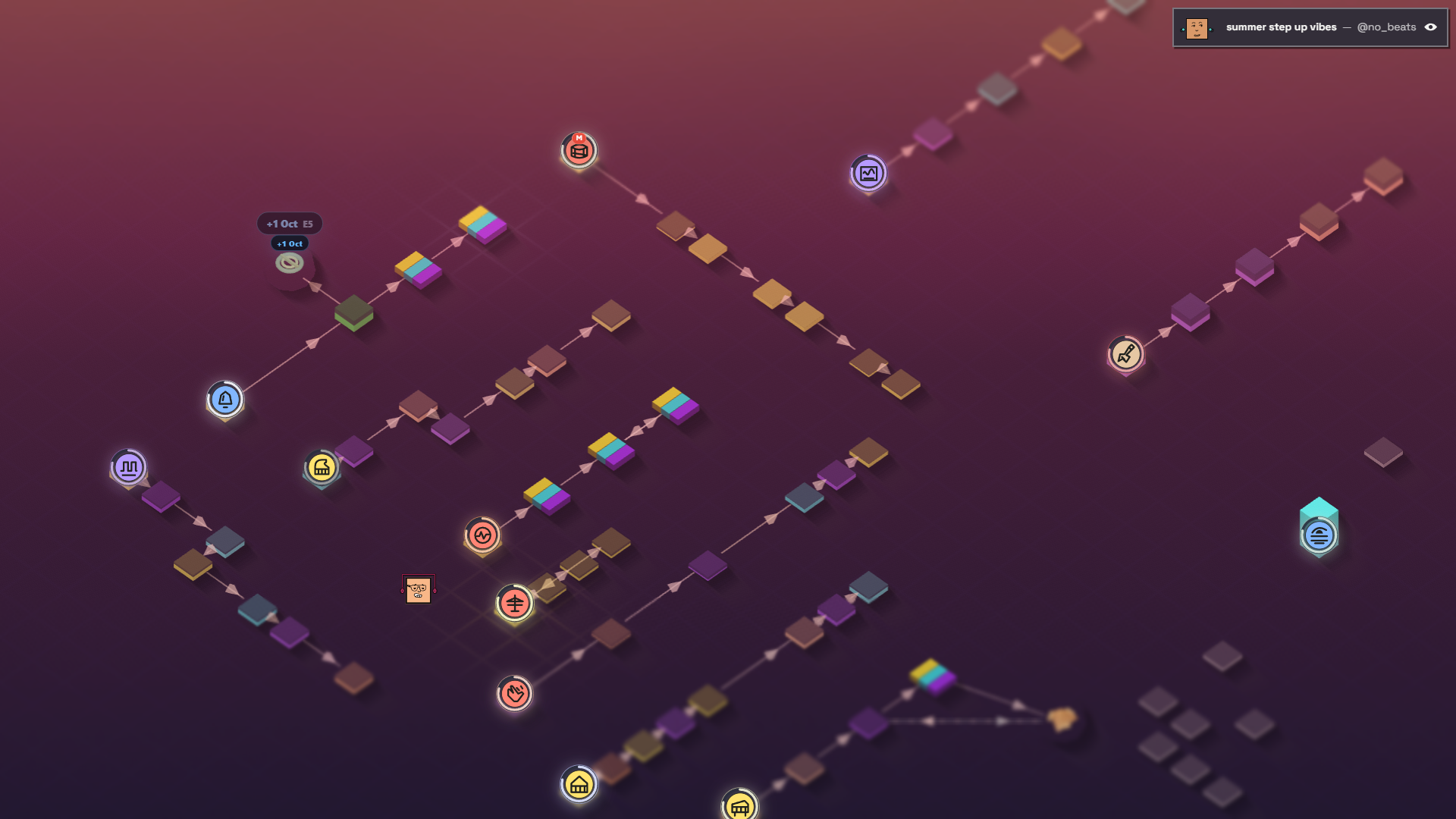
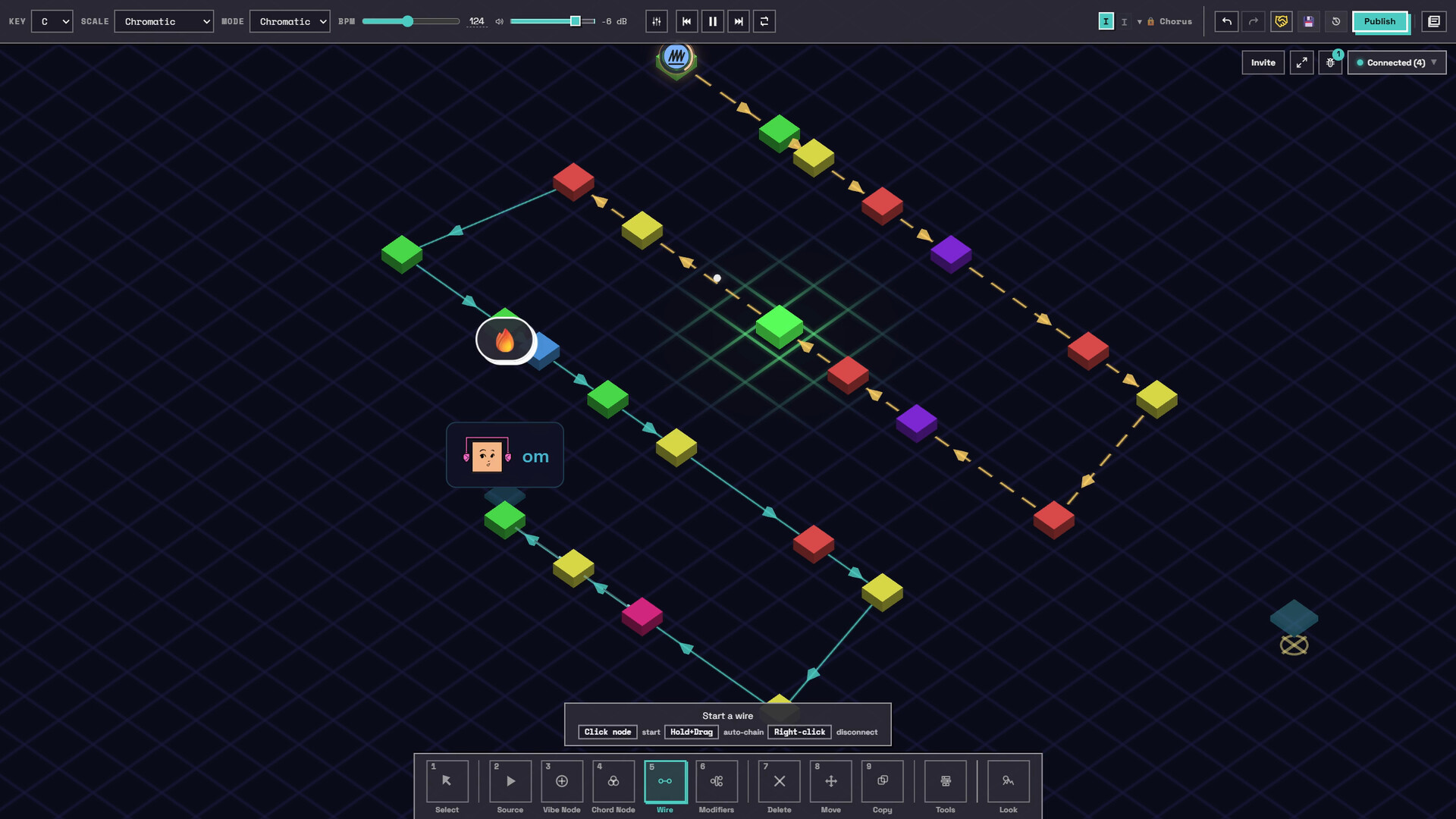
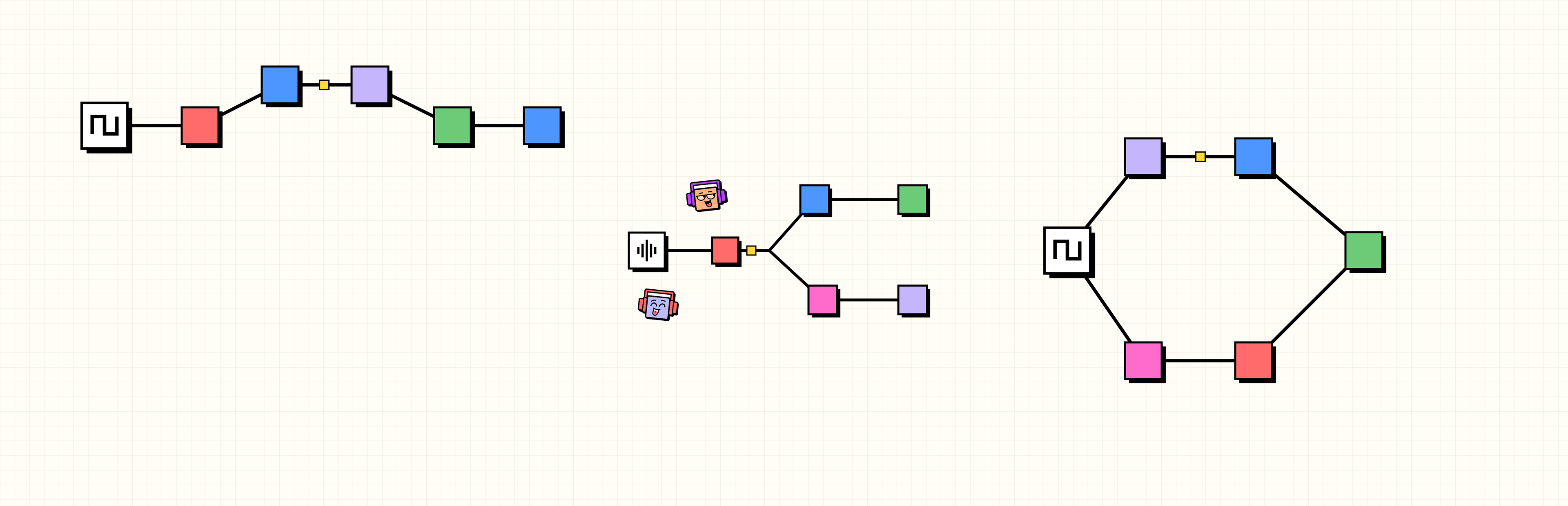
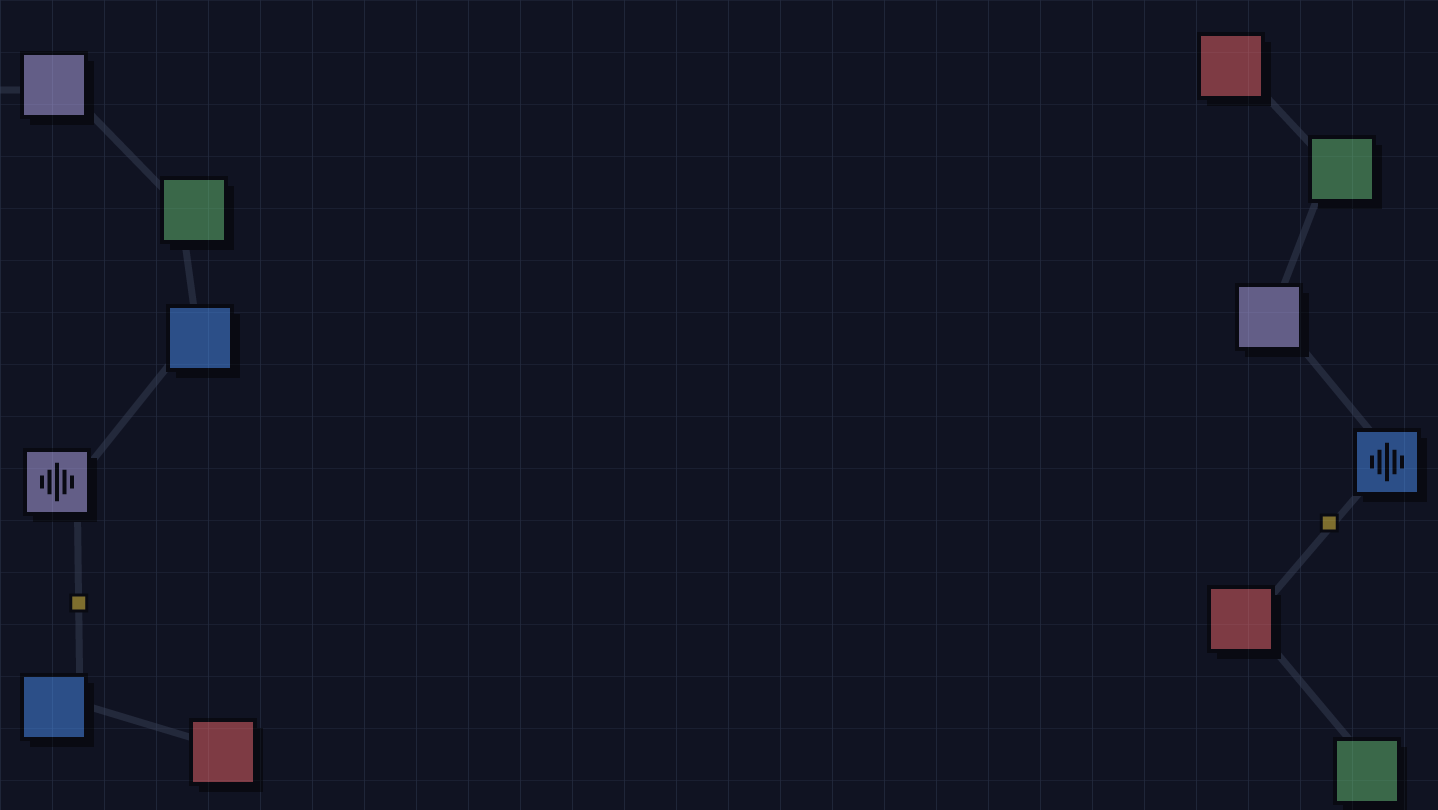
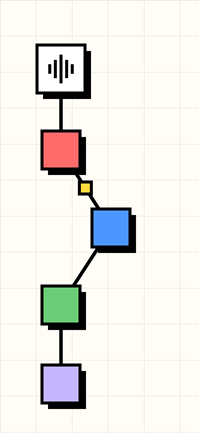
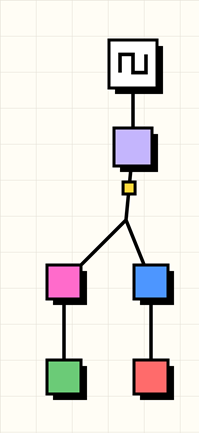
Vibe Together is a multiplayer music sandbox where you build songs you can see. Place musical objects on a shared grid, connect them, and hear the vibe emerge. Making music should feel more like playing a game than operating production software.
Build alone or invite friends to shape the same song in real time. Music creation becomes visual, playful, and communal. Anyone can vibe. No music theory required.
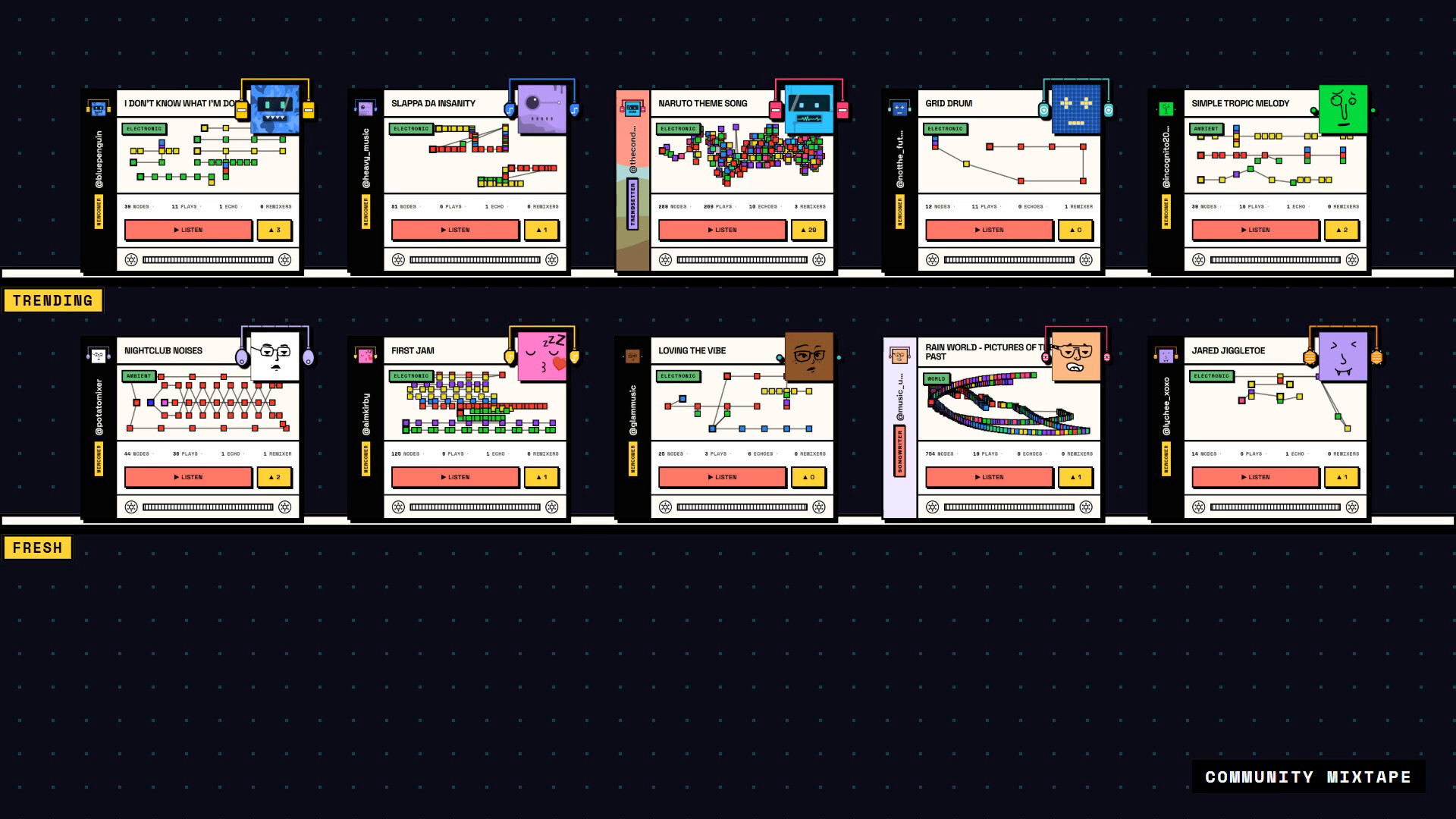
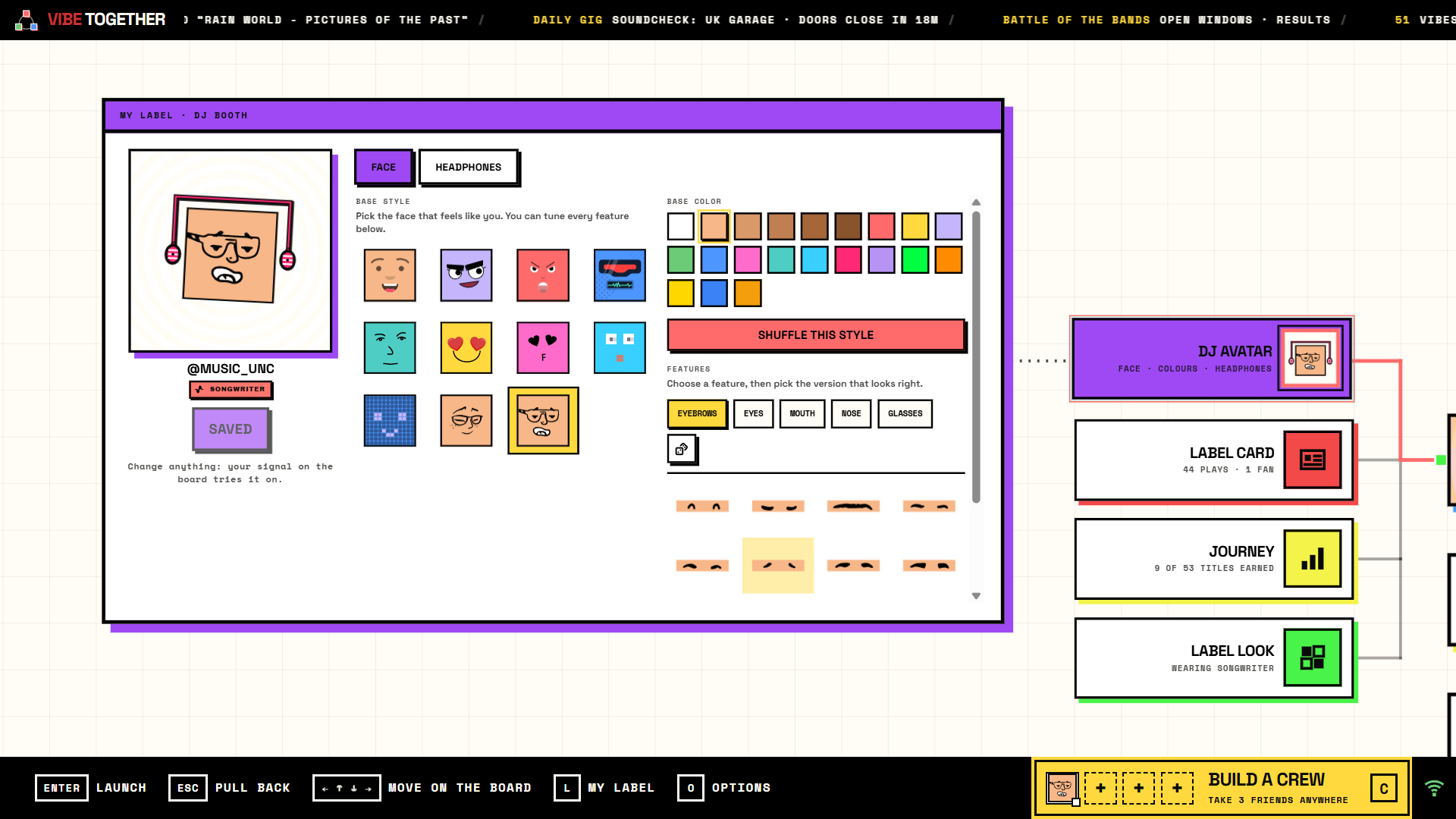
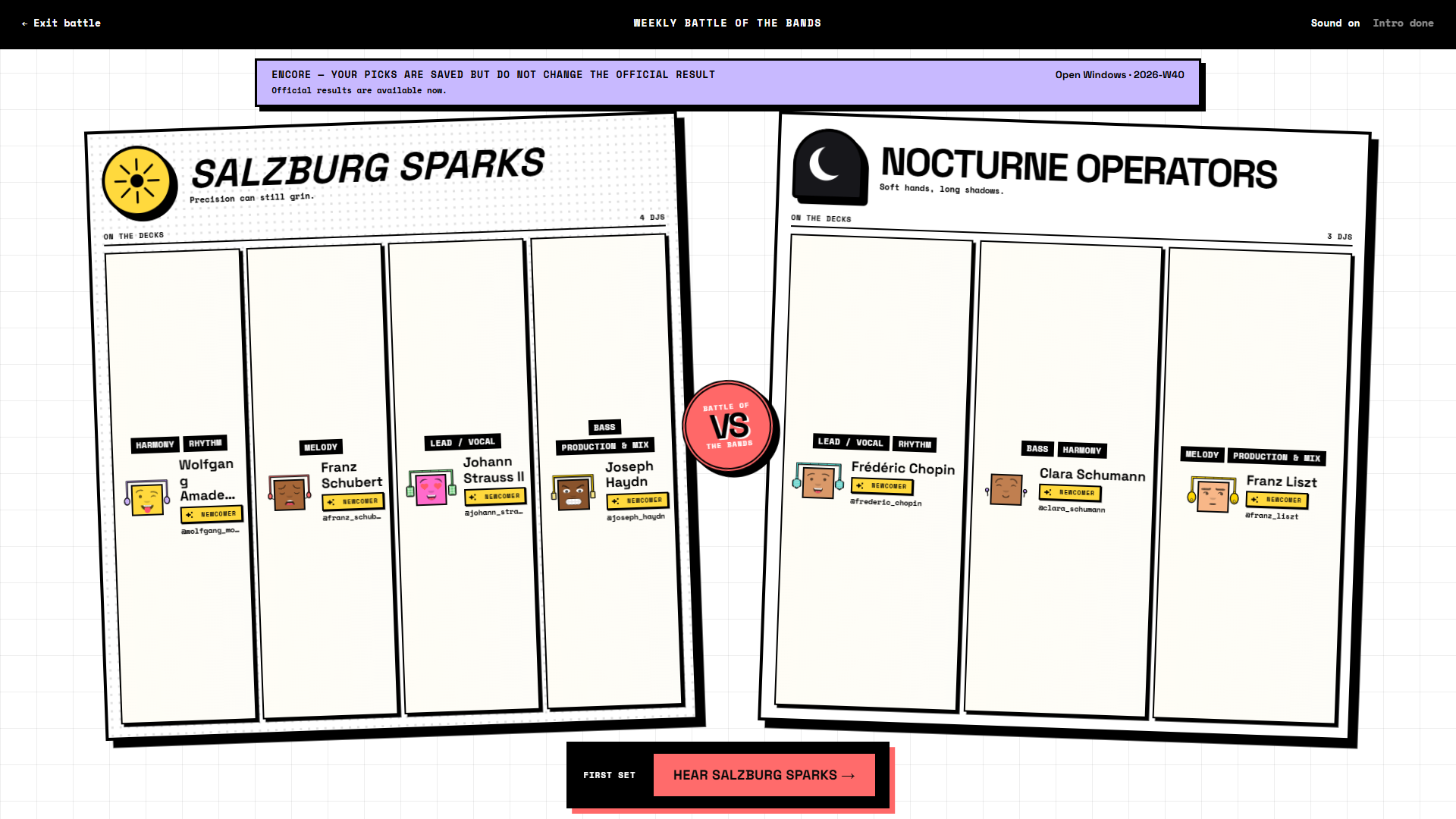
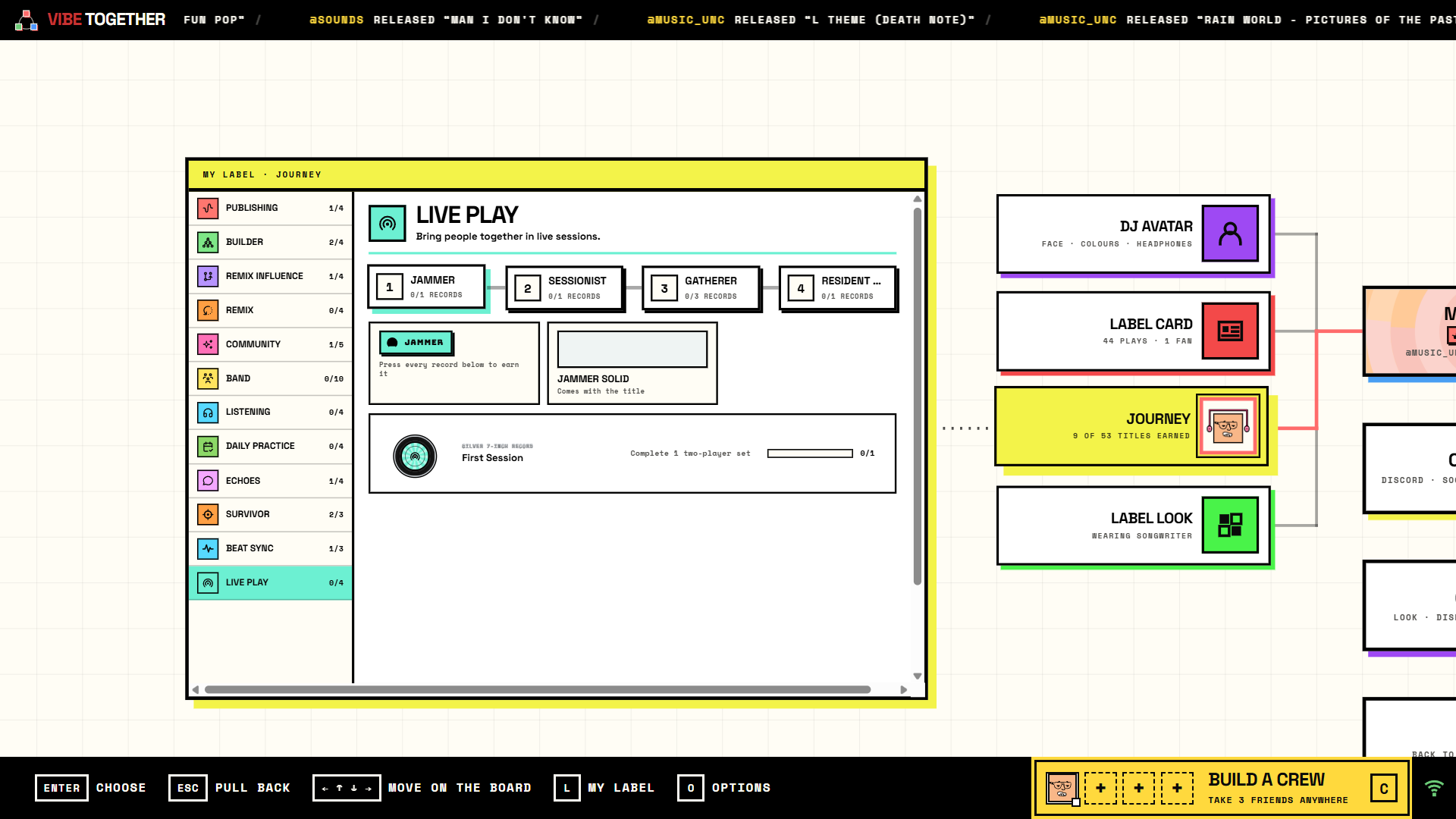
Find your place in the community by publishing your work, discovering new music, remixing compositions, entering a weekly battle of the bands, or leaving comments as your DJ avatar. Each path has its own progression, whether you're here to create, listen, connect, or play.
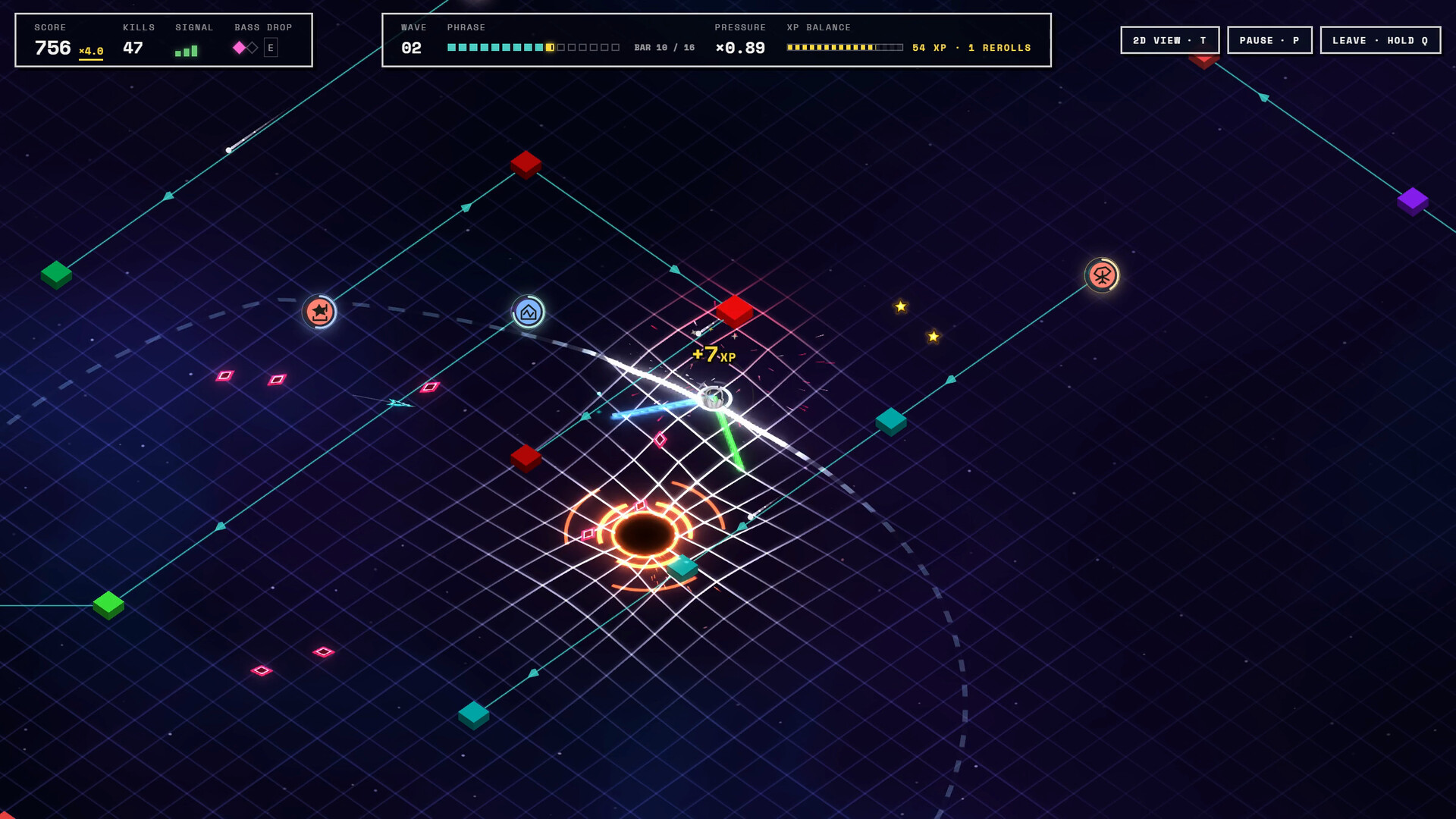
You can even turn any composition into a playable arcade, where any song can become a way to defend yourself or a new rhythm game to enjoy. Survive the waves and climb the leaderboards, all powered by music made by the community. Make songs you can see. Then play them.
A3 · The timeline never changed
talking about a revolution
Every music tool inherited the same shape: clips on a horizontal line, left to right, one pass at a time. It is a great way to finish a song but a poor way to play with an idea, and it has barely moved in thirty years.
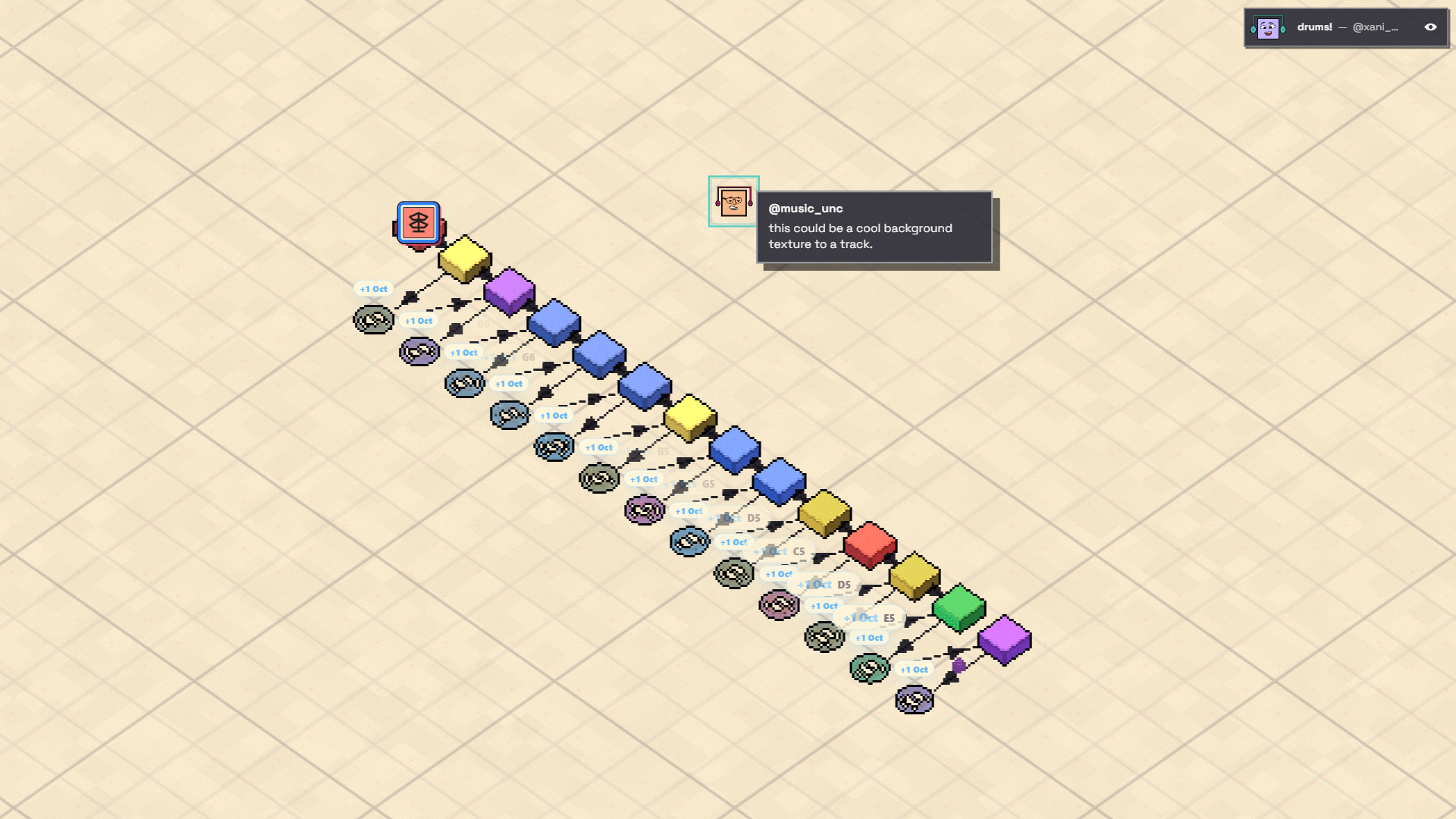
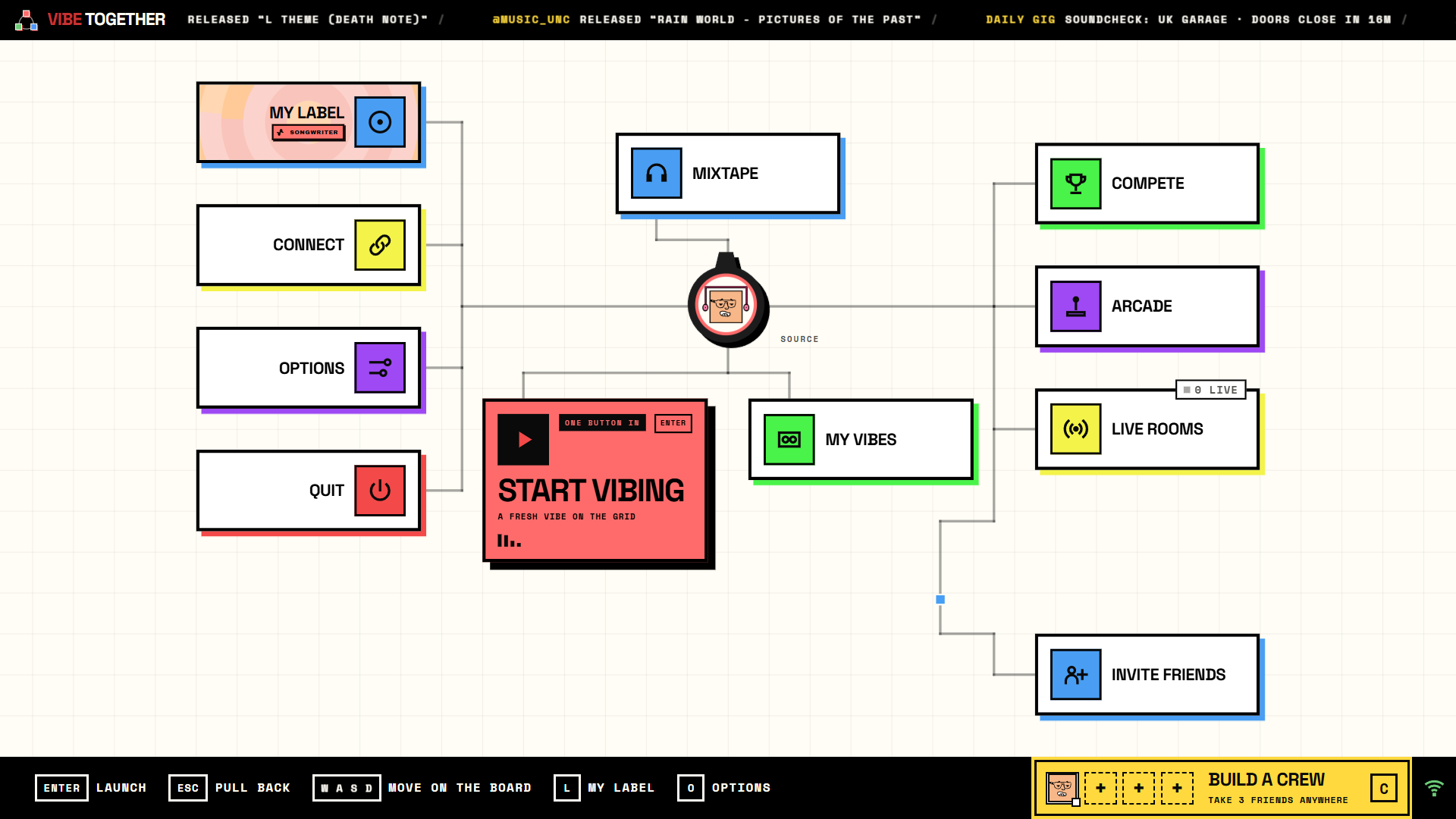
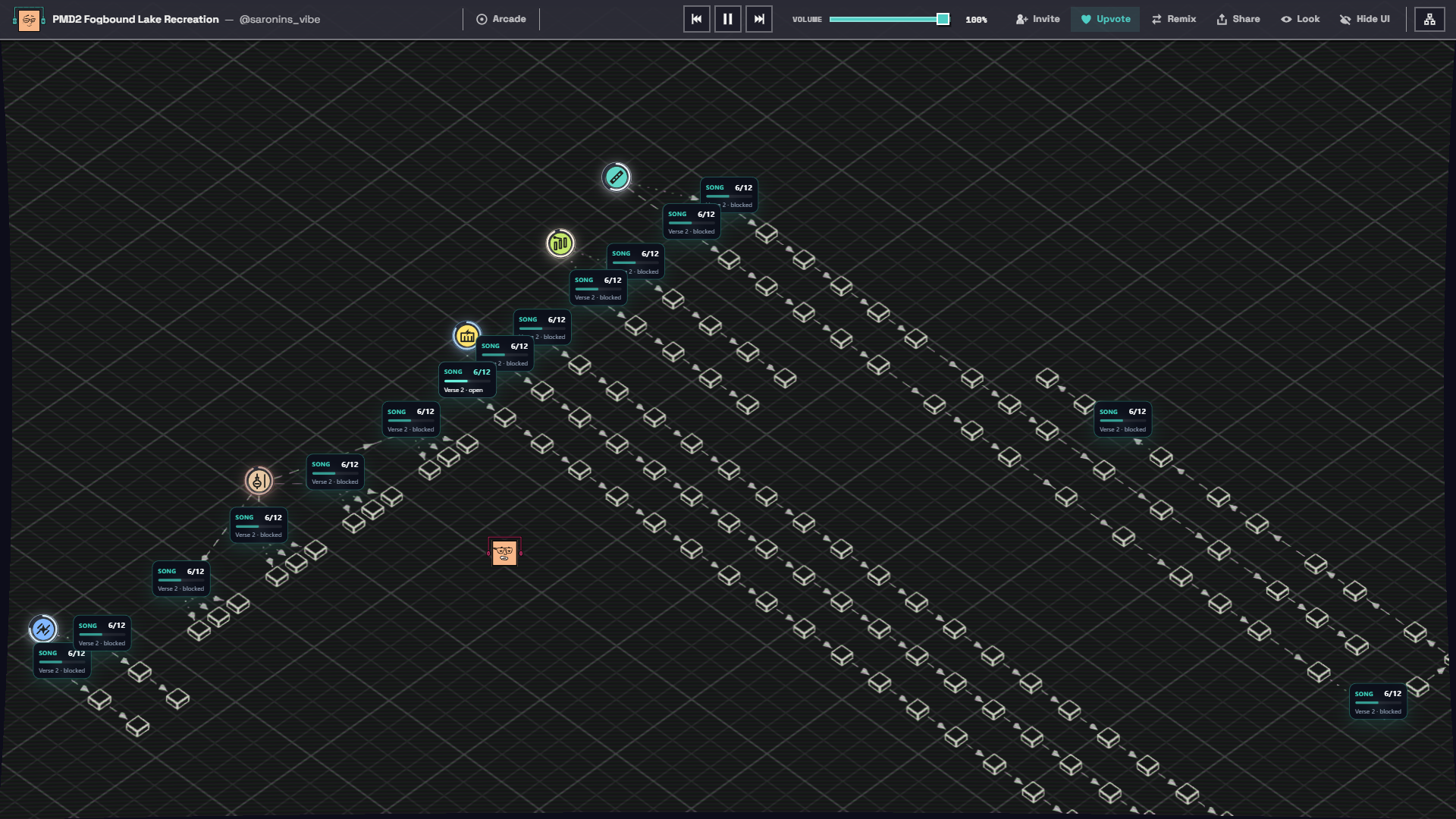
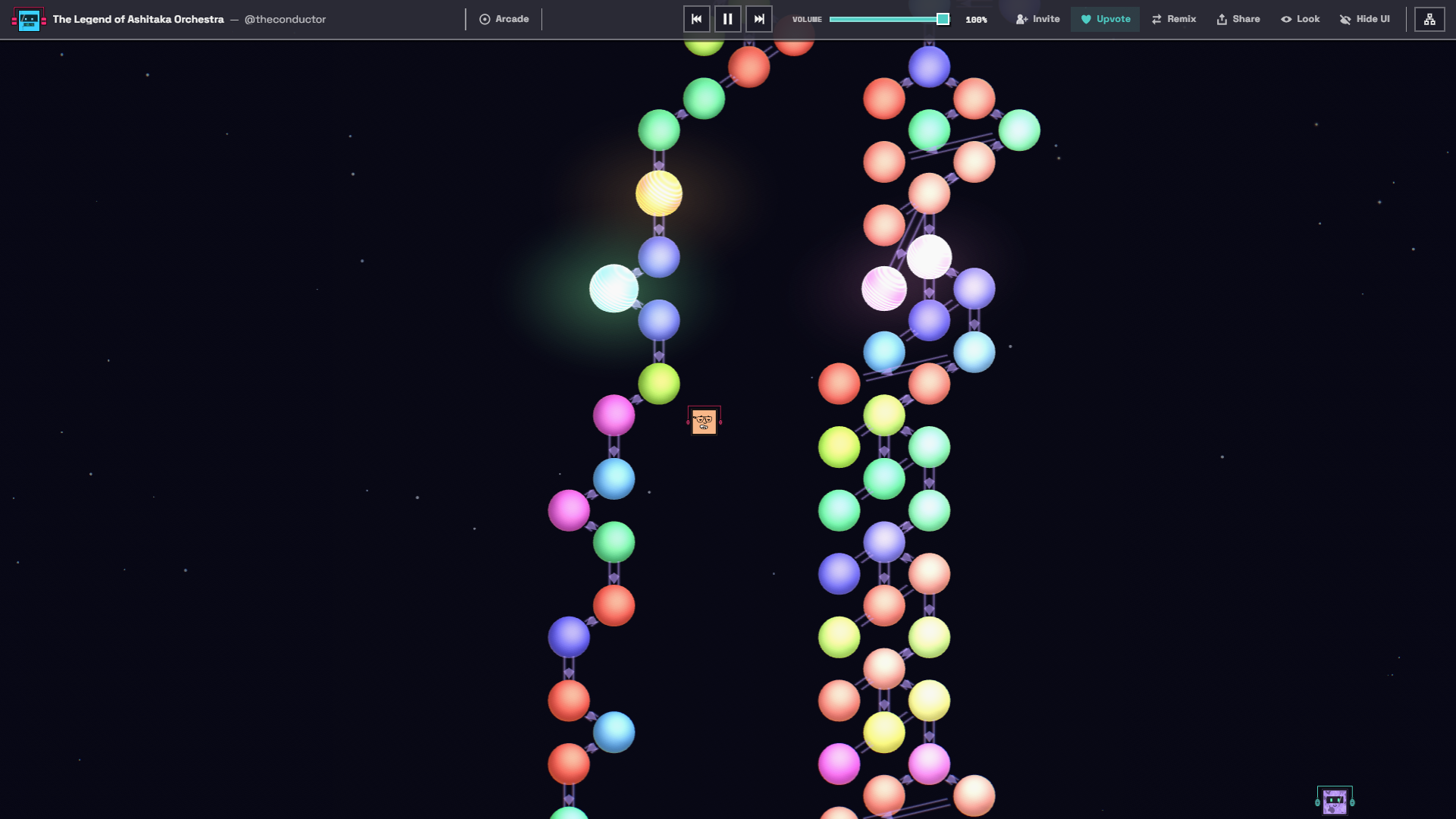
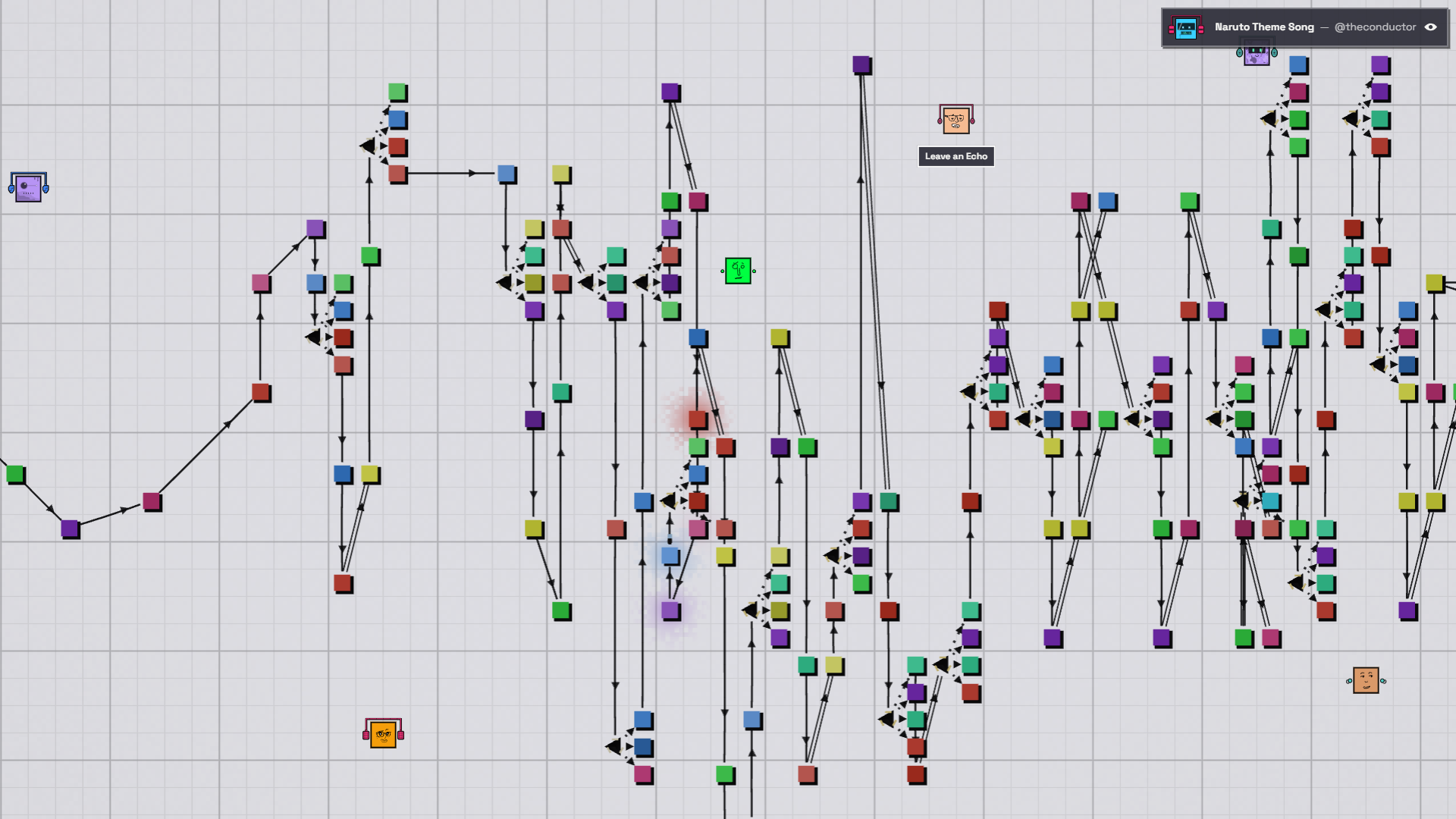
Vibe Together throws out the line and adds an explorable grid of placed objects. It combines non-linear sequencing with a world class procedural composition system. With it, pitch, rhythm and musical relationships are fully visible on a shared 3D surface. This enables more creative play, stronger memory, and fun abilities like probabilistic compositions. You are not editing a recording. You are building the machine that makes it. Music beyond the timeline.
A4 · No Prompt to Song AI!
A white box, not a black box
Music is how we celebrate, grieve, worship, and entertain. We must strike the right balance of where tools help us and where our creative choices remain ours. AI prompt tools hand you a finished song and compress making into asking. Endless songs, and little connection for listeners or makers. It's a black box: you prompt, it answers, and the discovery and exploration, the parts that make someone enjoy the work, are exactly what got automated. This is the wrong direction. We should not prompt away our creative impulse.
Vibe Together is a white box. Every rule that produces the music is visible on the grid, put there by you, and changeable while it plays. The system is procedural, built on music theory, and it surprises you constantly, but the surprise comes out of a machine you built and can read. You keep the authorship, the taste, and the learning. Humans keep the subjective decisions.
A5 · The next creative software
communal, shareable, and playful
Music software tools have not taken a dramatic leap in the past 20 yrs while the audience that consumes them has. Games and the power they have are rooted in community, sharing, identity, and progression. Creative software has to adapt and embrace those values.
Vibe Together is built on that conviction. It is communal, shareable, and playful.
A6 · Play is the point
Why it feels like a game
Creativity rewards exploring, and games are the medium that got best at making exploring feel worth doing. Creative software mostly forgot that: menus, panels, submenus, a manual.
So Vibe Together is built like a game: a grid you inhabit, objects with behaviour, instant feedback on every change, and progression for turning up. The interface is playful because play is how people find the idea they would never have planned.
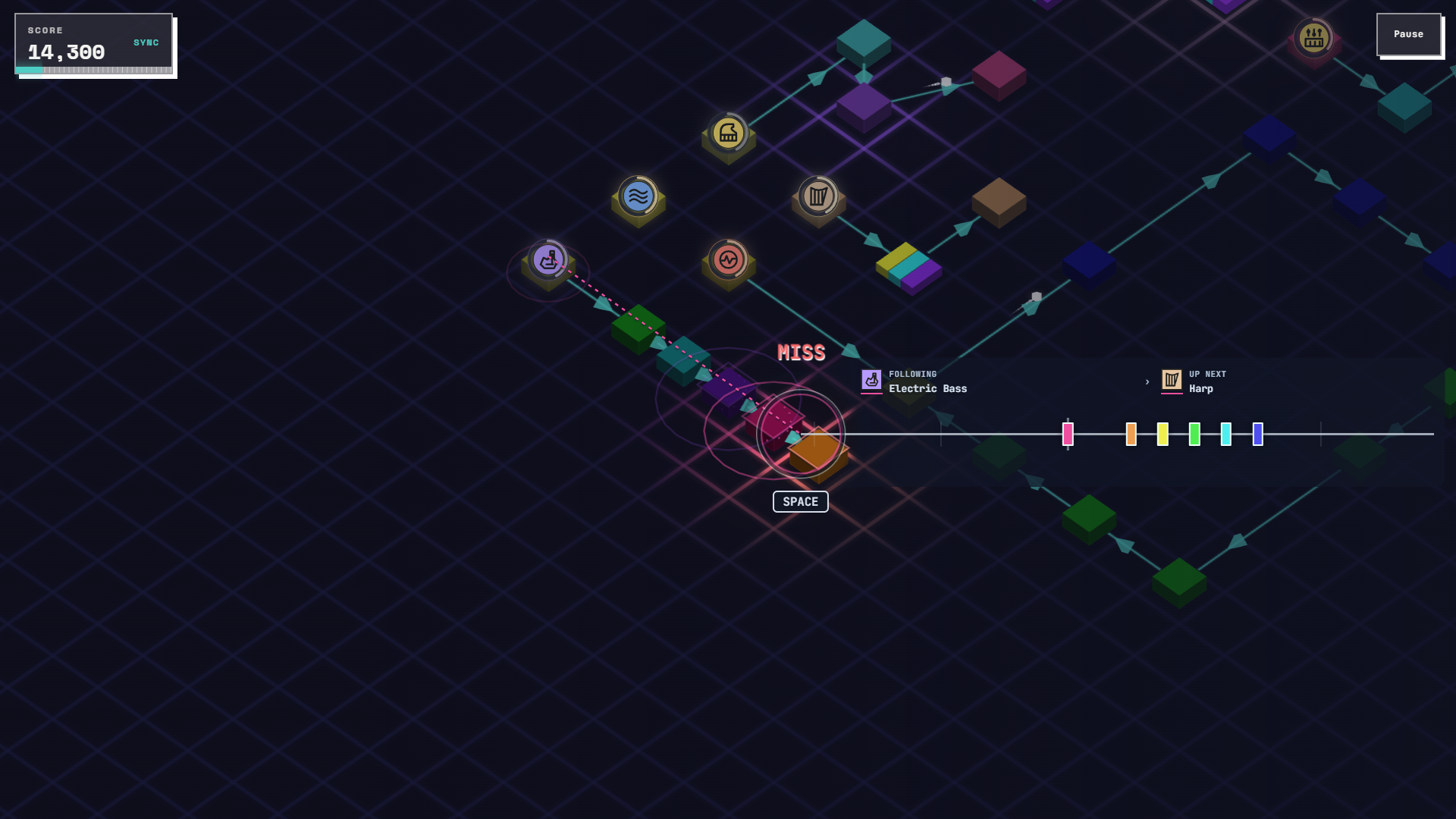
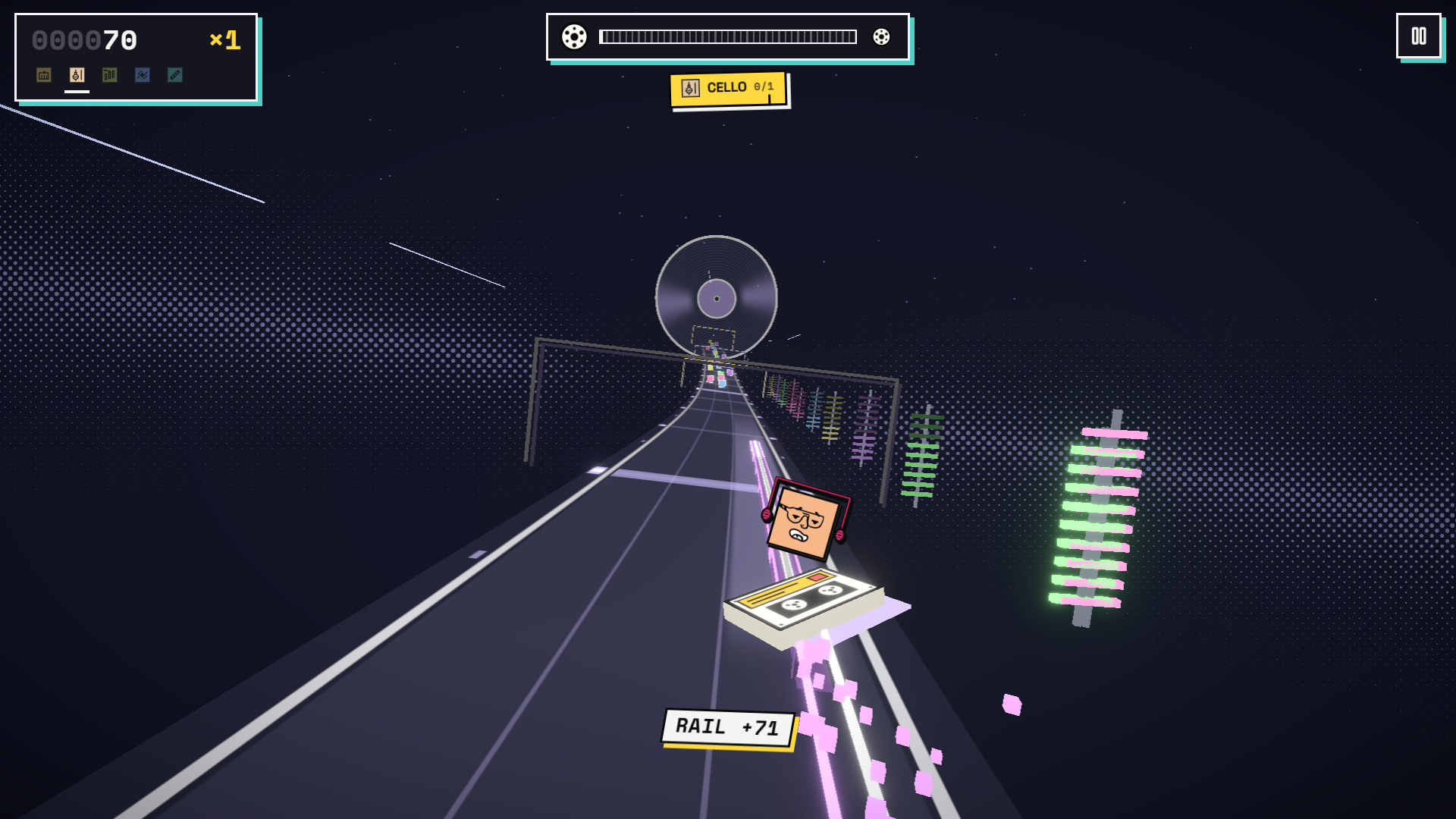
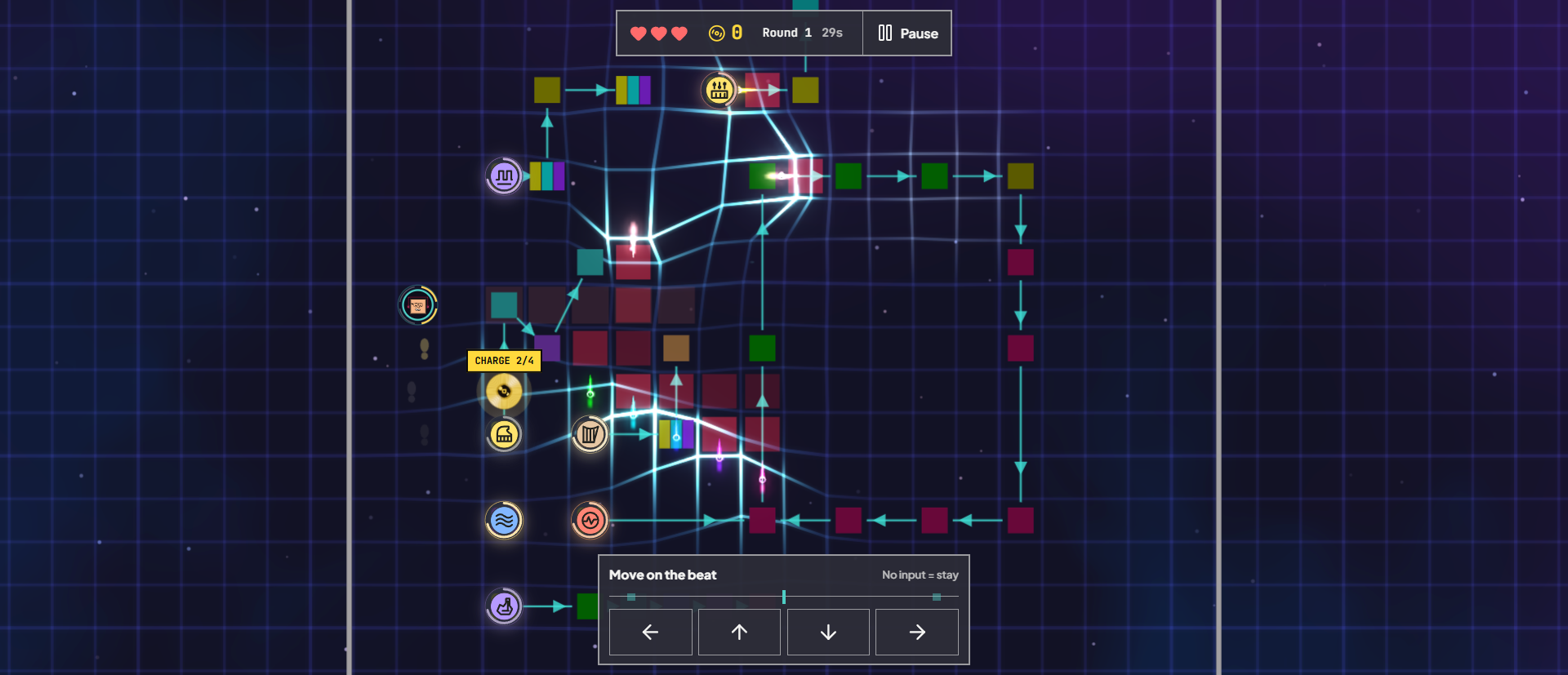
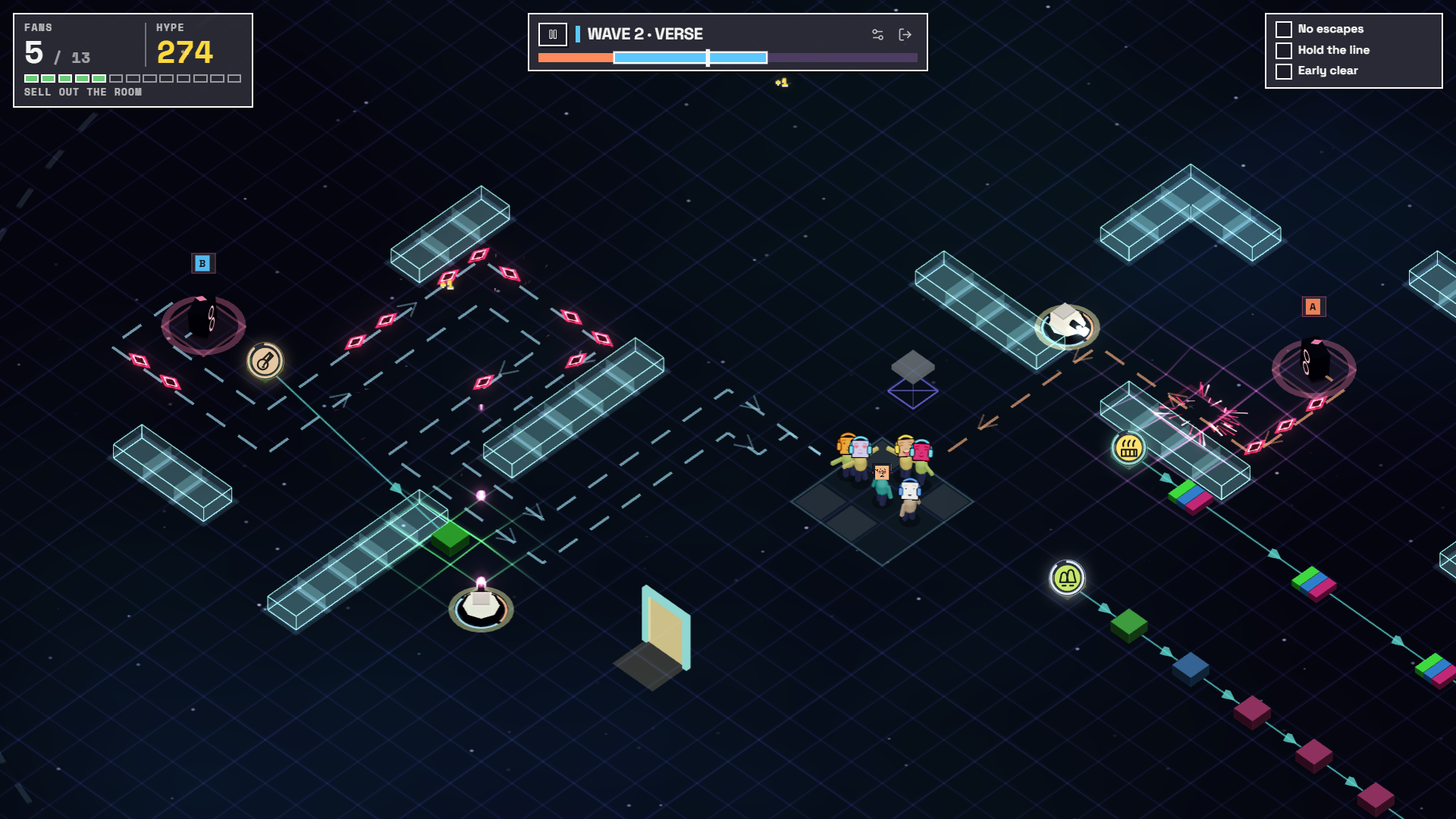
Any song becomes a level: play a composition you made with friends, or discover one in the Community Mixtape. Music Survivors turns its notes into weapons and enemies; Beat Sync, Vibe Ride and Beat Dodge offer rhythm, riding and dodging challenges driven by the same music. Making the song is only the beginning.
A7 · What is actually in it
The capability list
- Nonlinear sequencing on a near-infinite spatial grid, where distance is time and musical structure is something you can see.
- Harmony-aware procedural generation that listens to the current key, scale, mode, chord progression, phrase, rhythm and more before it makes a musical decision.
- A synth engine built for the web with Rust, SIMD and WebAssembly (WASM), with robust subtractive, FM and wavetable synthesis engines.
- Full mixer controls, plus purpose-built interfaces for shaping a mix without living in a conventional channel strip.
- Arcade Modes where every composition becomes a playable arena and every note becomes part of the fight.
- Real-time multiplayer sessions in the browser, up to 8 people on one grid. Nothing to install, phone or laptop.
- MIDI in and out, plus audio and stem export, so what you make leaves with you.
A8 · Bands, battles and contracts
The social half
Playing music with other people feels nothing like playing alone, and the identity of a band is half the reason anyone starts one. The community layer is built out of that feeling.
Sessions are joined by link. Live lobbies let you find an open room and join other players making music in real time. A daily contract gives you a prompt instead of a blank grid. Battle of the Bands puts crews against each other. Published pieces land on the Community Mixtape to be listened to, upvoted, commented on and remixed, with credit tracked back to whoever made the original. Everything you make moves a progression along, and that progression turns into titles, plaques and an identity that follows you around the product.
A9 · The person who made it
One person, too many instruments
The Music Unc built Vibe Together solo. The audio engine, the multiplayer, the procedural music architecture: one pair of hands.
He builds his own headphones. He owns a tabla, a djembe, bongos, a ukulele, a banjo, a guitar, a piano and a sitar, and will tell you he is mediocre at nearly all of them. The guitar is passable, and his mom says he can sing. He has played in bands called the Bearded Bumble Bees and Magical Suburbs.
After more than three years of iteration, major rebuilds and moments when the project nearly stopped, he is excited to share this music making game with the world. He hopes it brings more people into music making and sparks a lifelong passion for creating with friends.
A10 · Three years of iteration
The broad strokes
Vibe Together grew out of more than three years of building, testing and rebuilding a music automation game. The clearest lesson was that the most compelling part was not automation by itself. It was placing things, wiring them together and hearing the system change while it played.
Development refocused around that discovery. Vibe Together became a multiplayer music playground: a spatial grid instead of a timeline, available in a browser, where friends make music together and the songs become levels to play.
A11 · What it costs
Pricing, plainly
One payment of $20 opens the whole product, permanently. Nothing renews, and there is a $5-a-month path for anyone who would rather pay it off. Four payments and you own it outright.
You can start building before you pay a cent. A free account keeps 2 editable Vibes, and anything already made stays yours whatever you decide.
A12 · Creator clearance
Cleared for monetized video and streams
Original work you make in Vibe Together, built from material you created plus the sounds and samples we ship marked as approved for project use, is yours to release and monetize. Stream it, score a video with it, take the ad revenue. We file no claims and no Content ID against it, and you never need to email anyone for permission.
Two honest limits. Anything you bring in from elsewhere keeps whatever rights came with it. And publishing someone else’s vibe means crediting them, not us. A published composition can be listened to and remixed inside Vibe Together, but releasing someone else’s underlying work outside it needs their permission.
Covering the product is cleared too: videos and streams that capture Vibe Together as you use it, including other players’ published vibes as they play inside it, are yours to publish and monetize, with credit where practical. What still needs a creator’s permission is releasing their vibe outside the product as your own track.
If an automated system ever flags something that came from here, tell us and we will help get it resolved.
A13 · What is coming
Ask before you print dates
The public launch of the Steam demo is coming soon with a launch plan for all versions soon after. Get in touch for an early peak :)
Anything beyond that is either under embargo or not yet decided. Ask, and you will get a straight answer about which.