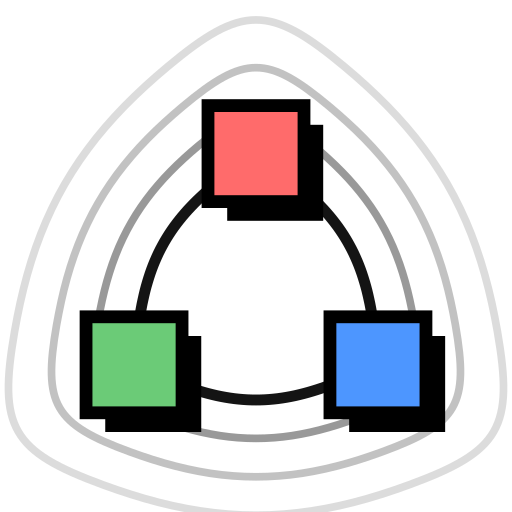
Harmonic gravity
Place chord nodes as harmonic anchors. Route melodic branches around them with nearest-chord-tone harmony transforms. The melody self-organizes around the harmony, even as the chords change.
Music has gravity. A chord pulls melody toward its tones. A scale pulls notes toward its degrees. A leading tone pulls toward the tonic. Spatial composition lets you make these gravitational fields explicit and visible.
The move
- Place a chord node in procedural mode. It will follow the global progression.
- Place a Source with a melody preset (free contour, scale-tone focus).
- Insert a Harmony modifier between the Source and a Vibe Node. Set its transform to nearestChordTone.
- Listen. Whatever pitch the Source generates, Harmony nudges it to the nearest tone of the current chord—even when the chord changes mid-phrase.
Automatic voice leading
The nearestChordTone transform implements one core voice-leading principle: when the chord changes from C-major to A-minor, every voice routed through it moves to the closest tone of A-minor, usually a step or a third. If the incoming pitch is already a chord tone, it can stay put. The smallest-interval move between chord tones is the central recommendation in classical voice-leading pedagogy, and the platform applies it on every chord change without you having to think about it.
Full transform reference. Continue learning