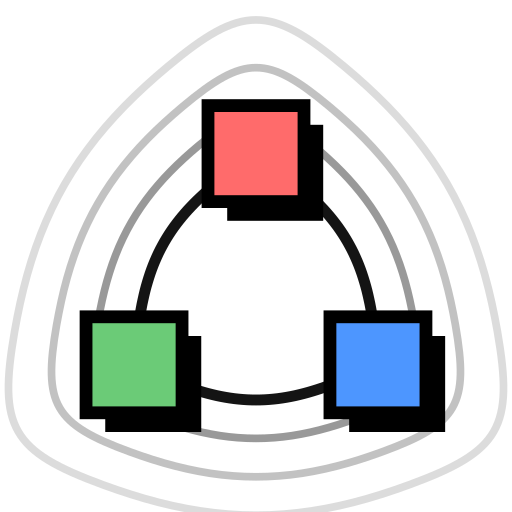
Distance-driven rhythm
The simplest and most distinctive spatial-composition gesture. Move a node and the rhythm changes because the wire just got longer or shorter, and the wire is the delay.
Place a Source. Place a Vibe Node. Connect them with a wire. The signal travels one tick for every grid step the wire spans. That is the rhythm.
Now grab the Vibe Node and slide it. As the wire grows or shrinks, the arrival time changes. The rhythm changes. Pull it close for a tight hit; push it away for a delayed answer; move it across the grid until one Source becomes a syncopated phrase.
The move
- Place a single Source on a four-beat trigger.
- Place three vibe nodes at varying distances, one cell away, four cells away, eight cells away.
- Connect each to the Source. Listen.
- You hear three voices answering at three different delays. The rhythm is the layout.
Why it matters
Most sequencers ask you to commit to a rhythm before you place sounds, then commit to sounds after the rhythm is set. Distance-driven rhythm reverses both: you place sounds where they look right, and the rhythm is whatever falls out. Edit the rhythm by moving nodes, physically, with the same gesture you use to arrange the layout. Two intentions become one action.
The conceptual deep dive on layout-as-timing. Continue learning