Probabilistic branching
A splitter in probability mode produces arrangements that vary over time without anyone sequencing the variation. Hi-hats that thin out, percussion that drifts, ornaments that come and go.
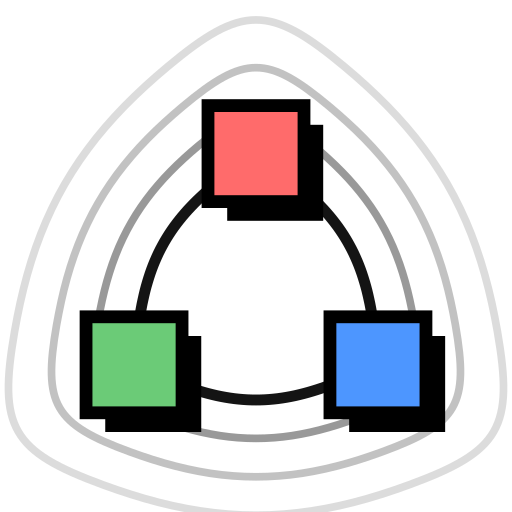
A Splitter does not have to send every signal everywhere. In probability mode, each outgoing wire makes an independent decision. Wire A at 100% always fires; Wire B at 50% fires roughly half the time; Wire C at 20% appears occasionally. Run a steady Source through it and the pattern stays recognizable without repeating itself exactly.
The move
- Place a Source with a measure trigger. Place a Splitter next to it.
- Connect Source → Splitter. Set the Splitter mode to probability.
- Connect splitter to three percussion vibe nodes: kick at 100%, snare at 80%, hi-hat at 30%.
- Listen. The kick is steady. The snare drops out occasionally. The hi-hat ornaments unpredictably.
Weighted vs probability
Use probability mode when you want density variation: wires that may or may not fire, allowing zero or many to fire from one input. Use weighted mode when you want arrangement variation: exactly one outgoing wire fires every time, but which one rotates by weighted random selection. Probability thins; weighted shuffles.